
Book group discussion contributors: Karen Word (lead), Kaija Gahm, Meredith Bean, Chad Martin
Note: ChatGPT was used to combine draft text written by different authors. AI output was then revised by both authors.
Overview
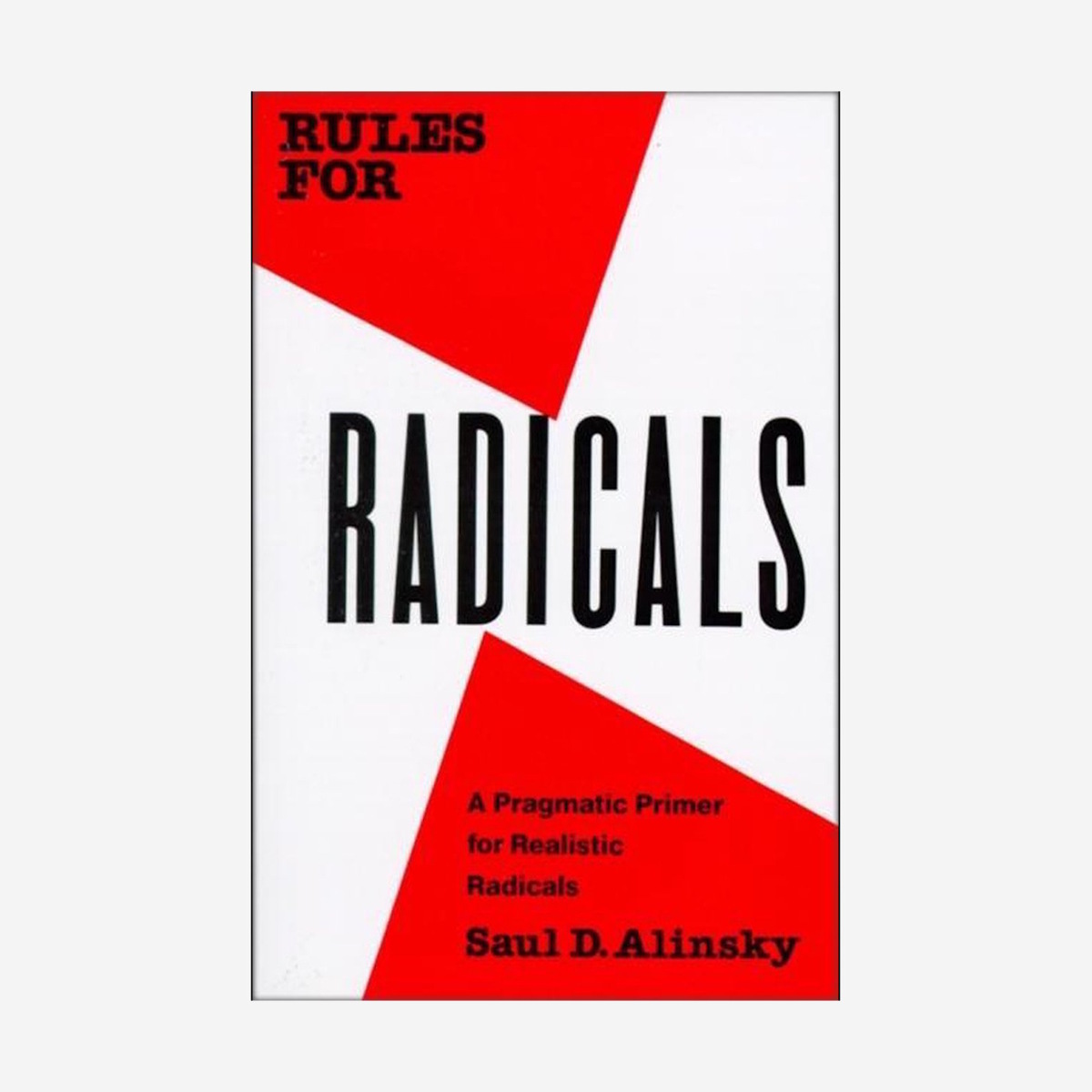
Rules for Radicals offers an honest and often provocative window into the mind of Saul Alinsky, one of the 20th century’s most influential organizers. Alinsky uses a blend of historical references, humor, and specific anecdotes to walk readers through the messy, improvisational realities of his experience with collective action. The book is not a step-by-step manual, and Alinsky doesn’t pretend otherwise. In the first half of the book, his “Rules” are mostly descriptive, capturing patterns in how power operates. The second half focuses more on prescriptive rules–Alinsky’s thoughts on how organizers should approach problems. Some pieces of guidance directly oppose others. Alinsky embraces these contradictions, discussing how rules and tactics often fail to generalize across settings. The book’s strength is in its pragmatism, and in the anecdotes that illustrate how strategy (or lack thereof), personality, and timing can intersect in practice.
Despite how compelling we found some of these anecdotes, we think that Rules for Radicals can be a rough fit for organizers working outside the specific context that Alinsky inhabited. His approach is rooted in a particular moment and identity, and his comfort with risk-taking, ethical flexibility, and confrontation may not resonate with all readers. If we imagine the text as a conversation, it can feel more like an argument than a pep talk. Still, this book remains a compelling, if sometimes uncomfortable, read. We think it is especially valuable as a reflective place to visit and return to, again and again, when grappling with the complexities of power and organizing, especially as our own situations and experiences change.
Who would benefit from reading this book?
We felt that Rules for Radicals would be extremely useful for organizers who have specific goals in mind, with increasing applicability as they gain experience and develop their own questions about how to approach their work. Having something to draw upon, to align against Alinsky’s anecdotes and examine through his lens, can make for an exceptionally useful and engaging read. For example, one book club member is actively working in organizing a union of graduate students, and she found it useful to frame her immediate situation in terms of Alinsky’s rules. Other book club members found the book a bit harder to relate to their own contexts. (Interestingly, Alinsky addresses this exact phenomenon in the “Communication” chapter, demonstrating at length how “people react strictly on the basis of their own experience” (p87)).
In our discussions, we noted that many people working in scientific communities are eager to organize but uncertain how or where to productively direct their efforts. Based on our conversations with members of other book groups, we understand that the first step here is called “cutting the issue”. Alinsky does not cover this, so we hope that our future handbook (stay tuned!) and associated references will be of use here. For readers who find themselves at this stage, it can still be useful to orient to a hypothetical organizing role with a strong foundation in history and philosophy, but the reader in this case should not necessarily expect to come away from Rules for Radicals with an immediate notion of how they will apply its lessons.
Takeaways that stuck with us
One concept that we have continued to think about is the assertion that complex coalitions are essential to building a powerful base. The rationale for this seems clear: the whole basis for organizing is that the individually powerless can become powerful enough to challenge the mighty when they act en masse. Yet we recognize the challenges of coordinating movement around an issue within a large and ideologically diverse base, and Alinsky does not extensively discuss practical strategies for making this work.
Another thing that lingers in our minds is the challenging discussion of means and ends in this book. An anecdote tells the story of a deathbed confession of a colonist shot in the Boston Massacre that undermined a key revolutionary narrative (that the British ‘started it’). This confession was promptly discredited by American revolutionaries, despite its veracity. From the vantage point of our modern era of competing “disinformation,” Alinsky’s frank recognition of the tactical necessity of half-truths, exaggerations, and even lies on occasions like these feels both refreshing in its honesty and frightening in its implications for informative discourse. Tension between the need for all-or-nothing messaging and vital roles for nuance, accuracy, and compromise in strategy and planning seemed pervasive and unresolved throughout the book.
We also appreciated Alinsky’s emphasis on the role of an organizer in building capacity through connection and listening: “[the organizer’s] biggest job is to give the people the feeling that they can do something” (p113). Alinsky emphasizes how important it is for an organizer to engage in conversations with the people they are trying to organize to identify what is actually important to them. By asking questions and suggesting possibilities – and not by giving orders or suppressing dissent–the organizer empowers people to identify their grievances, see common ground with others, and take the first steps toward making change. This kind of capacity-building is essential for fueling further change. At a time in our own country when many of us feel alone, unorganized, and powerless, we think this lesson is especially timely.
Finally, many of Alinsky’s stories towards the end of the book emphasize the centrality of improvisational tactics. As anyone new to something knows, there is a strong temptation to try to plan everything before doing anything. Alinsky’s advice makes it clear that this inclination should be tempered by the knowledge that sticking too closely to a plan can prevent opportunism, which is sometimes exactly what is needed. At some point, preparation and strategy should give way to winging it.
Questions we’d like to explore next
Rules for Radicals was a very interesting and thought-provoking book, and we felt that reading and discussion were well worth our time. That being said, it doesn’t meet all of the needs of an aspiring or developing organizer. With scientific communities in disarray, we are all eager to learn about “cutting issues,” weighing priorities, and identifying promising targets to rally around. More generally, we look forward to applying the perspectives of this book to the interpretation of more concrete, step-by-step advice. Finally, a key challenge in many of our minds seems to be re-evaluating how we communicate, as scientists, with non-scientists about evidence–a challenge that is related to community organizing but also highly specialized in its own right. Combining Rules for Radicals with resources that address these other issues would, we think, constitute a comprehensive preparation for organizing scientific communities to respond to current and future challenges.
Acknowledgements
Funding for this project is provided by the RIOS Institute.