
As STEM professionals, we have found ourselves uncertain about how to defend the future of science in a moment of political instability, shrinking public trust, and dwindling institutional support. Like many in our field, we did not receive formal training in community organizing or advocacy. Perhaps the lack of training on this topic is built on unfounded beliefs that science is apolitical. Regardless of the reason, we now know that community organizing skills are required if we want to protect and strengthen the systems we depend on to do our work.
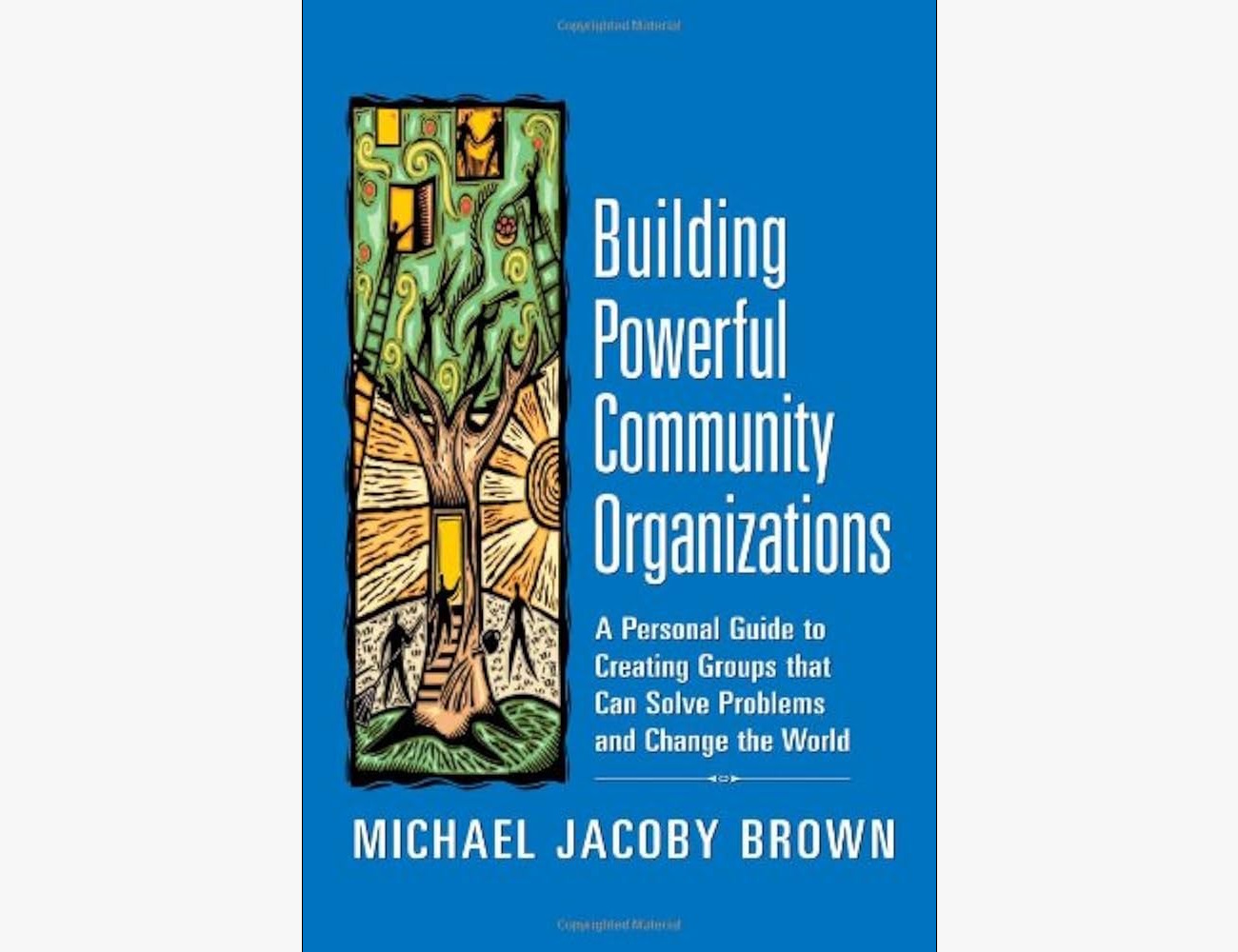
This is why we participated in a book club to read Building Powerful Community Organizations by Michael Jacoby Brown. It was our hope that the book would provide some direction, and perhaps a roadmap, to navigate the current situation we find ourselves in as STEM professionals. The “flood the zone” strategy has proven to be effective as the level of action required to protect our systems and institutions is so great that hopelessness and despair sink in.
There are several themes and lessons that emerged from reading and discussing the book:
- Power and Resistance: The book’s focus on power was seen as important although we wanted deeper exploration of what it means to gain and use power responsibly. Some drew parallels to the civil rights movement and its grounding in non-violence as a resistance strategy, asking what is the appropriate strategy in this moment?
- Relationships and Listening: The emphasis on listening stood out as a foundational skill. Organizing begins not with declarations, but with trust-building through 1:1 conversations, intentional onboarding, and making space for people to share what they need and what they bring. Tools like asset mapping and power mapping were highlighted as practical ways to turn those conversations into actionable strategies.
- Mutual Aid and Collective Safety: Readers wished the book included stronger emphasis on mutual aid (Dean Spade was cited as a key influence). Mutual defense compacts and cross-institutional alliances (e.g., Big 10 universities) were viewed as emerging models.
- Storytelling and Persuasion: Compelling narratives can unmask threats (e.g., exposing politicians’ motives through their own words) and rally people. The book shared a number of stories from Brown’s experiences in community organizing over multiple decades. It will be important for us to identify and share our stories as well.
- Lessons from the Climate Movement: Organizing lessons resonate strongly with climate community engagement, especially around renewable energy projects where local buy-in is critical. Scientists are often poor at collective action, but lessons from organizing could help build resilience against funding threats and political hostility.
The book sparked both critique and inspiration. We found it to be a clear, beginner-friendly guide to the basics of community organizing (strategy, power, resources, and sustainability), but it also seemed outdated for today’s political and social climate where government systems are being weaponized and fear is a central tool. Specifically, the text feels too slow, non-aggressive, and not adapted to the urgency, risks, and fractured social context of today. In 2025, efforts need to mobilize more rapidly and at scale. However, even though the book may not meet the challenges of this moment, it still grounded us in key questions:
Key Questions
- What does community mean?
- How do we build power responsibly?
- And what skills and alliances do we need to organize effectively in a world where urgency, risk, and resilience can no longer be ignored?
At a time when inaction seems prevalent, this quote from the book stuck with us: “If you do nothing, you will get nothing.” It’s a reminder that small, imperfect actions are still actions; that a “substantial minority” can make a real difference; that a network of STEM professionals, organized and active, can change the landscape.
Meet the Participants
Our Building Powerful Community Organizations book club was shaped by the diverse perspectives of its members, each bringing unique experiences from across the STEM landscape.
- Alycia C. (Science Community Manager)
“Throughout my career, I have been drawn to all things community, but I’ve never really explored community organizing in my work. I saw it as a tool for political and social activism, not for managing communities of scientists. Unfortunately, this disconnect is why we are in our current situation. I’m hopeful the work done on this project will raise awareness of actions we can take to be better advocates for ourselves and our work.” - Candice A. (Climate Professional)
“As both a STEM professional and community organizer, I work with institutions willing to bend and individuals looking to stand up for what they believe to be moral and noble. In this initiative, I’ve had great conversations about what we need to meet this moment and future moments in our field.” - Claudia S. (Research Administration Professional)
“I am a sociologist and grant writer who works with scientists every day. I see them struggle to confront attacks on science. This initiative is designed to give practical advice to scientists about how to get started in mobilizing their communities to protect US science.”
Acknowledgements
Funding for this project is provided by the RIOS Institute.